
USD 21.6 billion
Total investment volume of global brands in the Turkish automotive industry since 2000.

1.42 million
Number of vehicles produced in Türkiye in 2025.

1st
Türkiye's rank in commercial vehicle production in Europe in 2025.

5th
Türkiye’s rank in Europe’s automotive production in 2025.

13th
Türkiye s rank in global automotive production in 2025.

75%
Average export rate of OEMs in Türkiye for 2025.

6%
CAGR of the vehicle market in Türkiye for 2002-2025.
 More than 30 of the top 50 global suppliers have production facilities in Türkiye.

530+
Number of tier-one suppliers in Türkiye.

169
Number of suppliers' R&D and design centers in Türkiye accredited by the Ministry of Industry and Technology.
The foundation of Türkiye’s automotive industry dates back to the early 1960s. During a period of rapid industrialization and progress, this key sector transformed itself from assembly-based partnerships to a full-fledged industry with design capability and massive production capacity. Since 2002, original equipment manufacturers (OEM) have invested over USD 21 billion in their operations in Türkiye. These investments significantly expanded their manufacturing capabilities, which in turn led Türkiye to become an important part of the global value chain of international OEMs. Meeting and exceeding international quality and safety standards, today’s Turkish automotive industry is highly efficient and competitive thanks to value-added production.
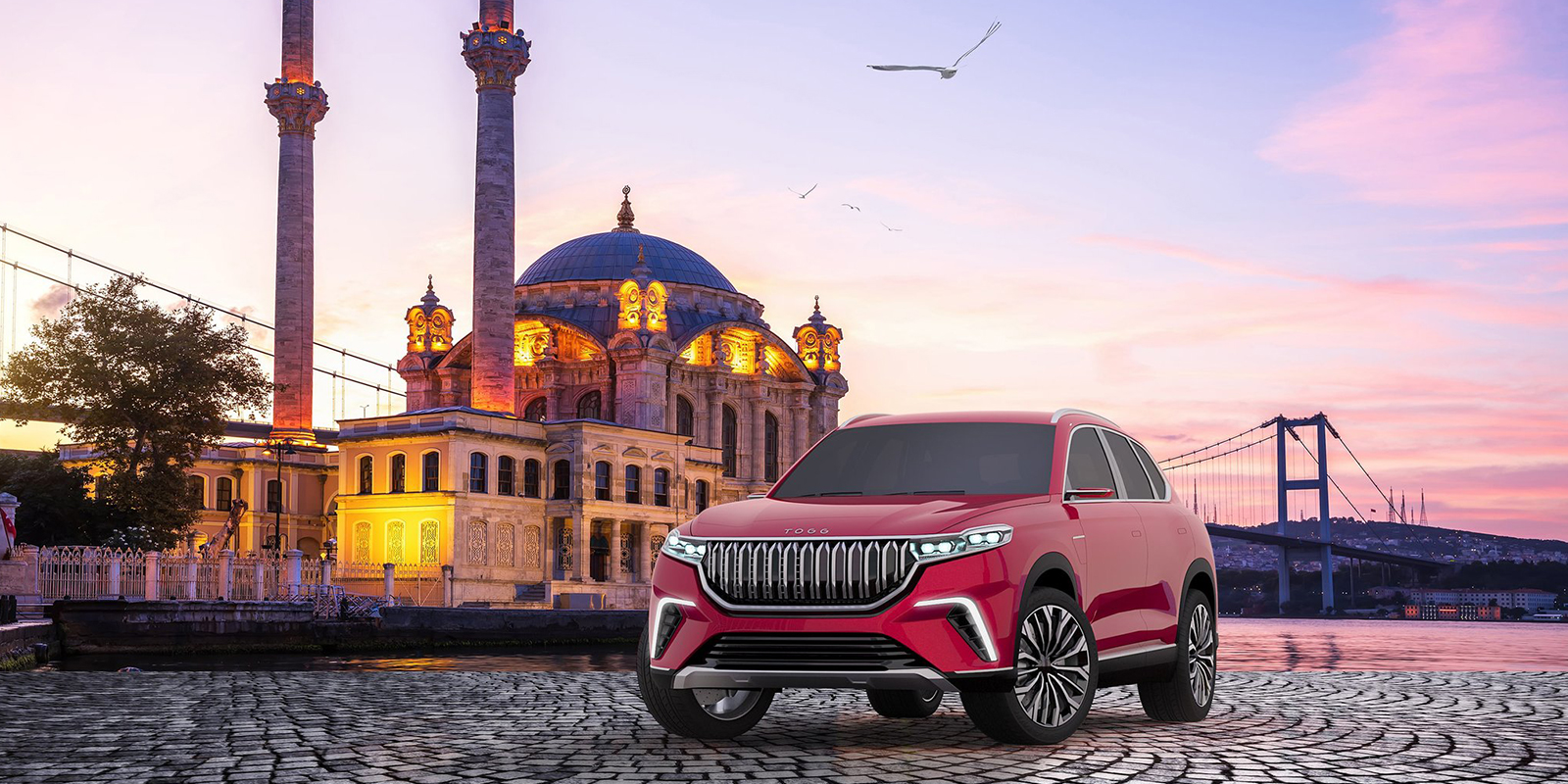
As part of its commitment to transforming its automotive industry, which has historically been a key economic driver in integrating the Turkish economy with the global value chain, and to its vision of making Türkiye an economic powerhouse, Türkiye has introduced its own locally-developed born-electric car built upon strength stemming from the country's long-standing know-how in the area.
- Türkiye's Automobile Joint Venture Group, known as Togg, will produce five different models on a joint platform with fully-owned intellectual and industrial property rights by 2030. The first SUV model hit the market in 2023, and since then Togg has emerged as a major player in Türkiye’s electric car market, further expanding its line‑up with the fastback sedan T10F. The company has also entered into a strategic technology partnership with CAIT, a subsidiary of CATL, to co‑develop a B‑segment electric vehicle platform based on CAIT’s Bedrock chassis.
- With the planned local production of the Ioniq 3 in Izmit, Hyundai will become the second brand to manufacture battery electric passenger cars in Türkiye after Togg, and the first global OEM to launch EV production in the country.
- Leveraging a competitive and highly-skilled workforce combined with a dynamic local market and favorable geographical location, the total passenger and commercial vehicle production in Türkiye has increased by almost five times from 300,000s in 2002 to more than 1.4 million units in 2025. This represents a compound annual growth rate (CAGR) of around 7 percent during that period.
- Significant growth posted by Türkiye’s automotive sector led to the country’s becoming the 13th largest automotive manufacturer in the world and 5th largest in Europe by the end of 2025.
- Türkiye has already become a center of excellence, particularly with respect to the production of commercial vehicles. By the end of 2025, Türkiye was the first biggest producer of commercial vehicles (CVs) in Europe.
- Proven as a production hub of excellence, the Turkish automotive industry is now aiming at improving its R&D, design, and branding capabilities. As of June 2026, 169 R&D and design centers belonging to automotive manufacturers and suppliers are operational in Türkiye.
- Notable examples of global brands with product development, design, and engineering activities in Türkiye include Ford, Stellantis, Daimler, AVL, and FEV. Ford Otosan’s R&D center is one of Ford’s three largest global R&D centers, while Stellantis’s R&D center in Bursa operated by Tofaş (formerly Fiat’s Turkish joint venture) is the Italian company’s only center serving the European market outside its home country. Meanwhile, Daimler operates R&D and technology center in Istanbul, including global software and product development hubs, which complement the German company’s truck and bus manufacturing operations in Türkiye. AVL Türkiye, which opened up its 2nd R&D center in Türkiye, develops autonomous and hybrid vehicle technologies. Within the TRATON Group’s (Volkswagen Group’s commercial vehicle division) bus business, MAN Türkiye’s R&D center in Ankara has been established as the main global competence center for the development of MAN and NEOPLAN branded buses.
- Türkiye offers a supportive environment on the supply chain side. There are around 1,100 component suppliers supporting the production of OEMs. With the parts going directly to the production lines of vehicle manufacturers, the localization rate of OEMs varies between 50 and 70 percent.
- Türkiye is home to many global suppliers. There are more than 250 global suppliers that use Türkiye as a production base, with 30+ of them ranking among the 100 largest global suppliers.
- Auto manufacturers increasingly choose Türkiye as a production base for their export sales. This is evidenced by the fact that around 75 percent of vehicle production in Türkiye was destined for international markets in 2025. Türkiye exported more than 1 million vehicles to international markets in the same year. In addition, Türkiye has been the number one vehicle exporter to European markets for around a decade.
